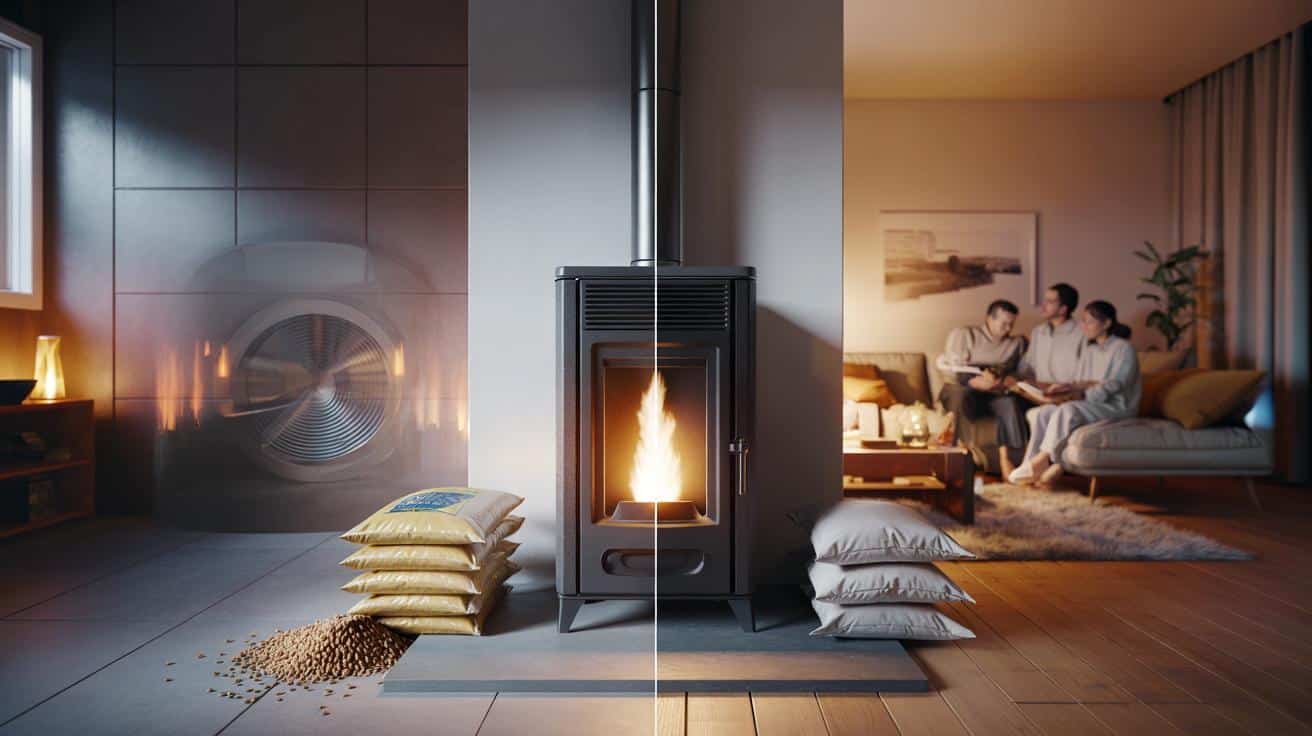
Many people install a pellet stove expecting cosy warmth, then end up living with a constant mechanical hum and rattle.
That background drone changes how a room feels. A living space that should invite long evenings and slow conversations starts to sound like a server room. More and more owners are quietly searching for ways to soften the noise without giving up the convenience and efficiency of pellets.
Why modern pellet stoves sound so intrusive
Pellet stoves gained popularity because they burn cheap fuel, offer steady heat and can run on timers. Yet many owners only learn about their acoustic quirks after installation. A typical unit contains:
- an auger motor feeding pellets into the burn pot,
- a combustion fan that pulls air through the firebox,
- a room fan that pushes hot air into the living space,
- a series of metal panels and ducts that can vibrate.
Each component adds a different layer of sound. The auger gives a rhythmic crunch, the fans supply a continuous whir, and loose panels may buzz. None of this seems dramatic in a showroom. In a quiet home at night, the same noises feel far louder.
Most of the noise does not come from the fire itself, but from air and pellets being moved aggressively through the stove.
Many owners assume they need an entirely new model or costly sound‑proofing. Yet heating technicians point to a less obvious culprit: how the stove breathes.
The forgotten tweak: adjusting airflow and fan strategy
The “insider trick” professionals talk about is not a secret part or an expensive upgrade. It is a methodical adjustment of airflow and fan settings, combined with a small change to how the stove sits in the room. Together, these changes can transform the acoustic profile of the appliance.
Step 1: Tuning the combustion fan instead of maxing it out
Many installers leave the combustion fan near its factory maximum, especially when they want to avoid complaints about smoke or dirty glass. That choice can make the flame stable but noisy. The fast airflow pulls air through narrow passages, which generates a high‑pitched hiss.
Most modern models hide a service menu or mechanical trimmer that allows small reductions in fan speed. A qualified technician can lower the combustion fan in fine steps while checking three things: flame height, exhaust safety and soot levels on the door glass.
A slightly slower combustion fan often cuts noise dramatically while keeping the flame clean and safe.
On many stoves, the difference between a harsh whistle and a soft rush comes from just a few percentage points of fan speed.
Step 2: Shifting from high power to long, low burns
The second part of the tweak concerns the heating schedule. Owners who feel cold often push the stove to its upper power range. Fans spin faster, pellets drop more often and every mechanical sound stands out. A more acoustic‑friendly strategy uses extended low or medium settings.
Instead of blasting heat for short periods, technicians recommend letting the stove run longer at a reduced level. This means:
- fan motors produce a gentler airflow,
- pellet feed cycles become less aggressive,
- temperature swings in the room shrink,
- the fire sounds more like a soft, constant burner and less like a machine cycling on and off.
Many control panels allow custom programmes, with different levels during the day and night. A “night profile” that drops both power and room fan speed can change how the whole house sounds after sunset.
Step 3: Decoupling the stove from the structure
The third element is physical. A pellet stove bolted or resting directly on a hard floor can behave like a giant speaker, sending vibration into joists and tiles. That vibration then resurfaces as hums in distant corners of the room.
Installers often focus on safety clearances and exhaust routing, but forget acoustic decoupling. Simple, heat‑resistant isolation pads placed under the stove feet can interrupt the path of vibration into the building structure.
A stable but slightly isolated base lets the stove move microscopically without turning the floor into a sounding board.
Where building codes allow, a thin stone slab on top of a compliant mat can make a noticeable difference. The key is firmness plus a small amount of damping, not a squishy surface.
Reading the sounds: what different noises reveal
Before adjusting anything, technicians listen. Each type of noise points to a different cause, and that helps decide which tweak to try first.
| Type of noise | Likely source | Typical remedy |
|---|---|---|
| High‑pitched whistling | Air rushing through restricted inlets or sharp edges | Adjust combustion fan, clean air passages, refit seals |
| Low mechanical hum | Fans or motors vibrating against panels or the floor | Add damping pads, tighten screws, decouple base |
| Intermittent clunking | Auger feeding pellets or misaligned components | Inspect auger, check bearings, correct pellet quality |
| Rattling or buzzing | Loose covers, grilles, decorative panels | Secure panels, add small shims or felt strips |
This listening phase may sound low‑tech, yet it prevents random adjustments that could harm combustion quality or safety.
The role of maintenance in keeping a quiet flame
Air and pellets do not flow the same way in a dusty, ash‑filled stove as in a clean one. Dirty fans spin harder to achieve the same airflow. Rough deposits create turbulence, which translates to noise. Regular maintenance becomes a silent partner of the forgotten tweak.
Cleaning that targets noise, not just safety
Standard maintenance focuses on preventing fire hazards: ash removal, flue inspection, gasket checks. To reduce noise, owners and technicians also pay attention to acoustic‑sensitive areas:
- fan blades: deposits interrupt airflow and add imbalance,
- air inlets: cobwebs and dust narrow passages, raising air speed and hiss,
- heat exchangers: soot makes surfaces rough, creating louder turbulence.
A quiet stove usually has smooth air paths and clean, balanced fans. Even small build‑ups can undo the benefit of careful airflow tuning.
Pellet quality and its surprising acoustic effect
Owners often judge pellets by heat output and ash level. The shape and consistency of pellets have an acoustic impact as well. Very brittle pellets leave more fines, which clatter loudly in the auger and burn pot. Irregular lengths can strike the metal chute with a harsher sound.
Trying two or three brands over a heating season sometimes reveals an unexpected gain: the stove simply sounds calmer with a denser, more consistent pellet, even at the same settings.
When to call a professional, and what to ask for
Because airflow settings affect combustion and emissions, deep adjustments belong to qualified professionals. Yet many owners do not know how to frame the request. They mention “annoying noise” and receive a quick check, but no acoustic tuning.
Asking specifically for fan optimisation, vibration control and a low‑noise operating profile guides the technician toward the right levers.
During a visit, questions that help include:
- Can the combustion and room fan speeds be reduced safely on my model?
- Is the current power level higher than my room actually needs?
- Would isolation pads under the stove meet local safety rules here?
- Are any panels or ducts acting as resonance points?
This type of conversation shifts the focus from raw heat output to acoustic comfort, which many service plans ignore.
Why a quieter stove changes how a home feels
Noise from heating appliances often hides in plain sight. People describe feeling tense or restless but do not always connect that mood to the constant fan noise in the background. Once the sound softens, the contrast becomes obvious.
A calmer stove often allows lower television volume and more relaxed conversations. In open‑plan homes, the effect reaches bedrooms and workspaces at the far end of the building. For households with young children or people working from home, this change can matter as much as fuel savings.
Thinking about acoustic comfort when planning any upgrade
The lessons from pellet stoves carry over to other equipment: heat pumps, mechanical ventilation, even kitchen extraction systems. Devices that move air or fuel share similar patterns of noise and vibration. When planning upgrades, homeowners can place acoustic comfort beside efficiency and price.
As a rough guide, any system with fans, pumps or motors benefits from:
- careful choice of mounting surface and isolation,
- adjustable speed controls rather than fixed high settings,
- regular cleaning of air paths to avoid turbulent whine,
- installation in positions where noise does not point directly toward quiet rooms.
Manufacturers now pay more attention to decibel ratings, but those figures often come from ideal test benches. Real homes, with echoing walls and hollow floors, react differently. Owners who understand how small adjustments and basic damping change the acoustic picture hold a real advantage.
For anyone living with a loud pellet stove, the road to a softer, more peaceful flame usually starts with that forgotten tweak: professional airflow tuning, gentler fan strategy and a better‑isolated base, supported by consistent maintenance. The hardware stays the same, yet the sound of winter evenings shifts from mechanical to human again.