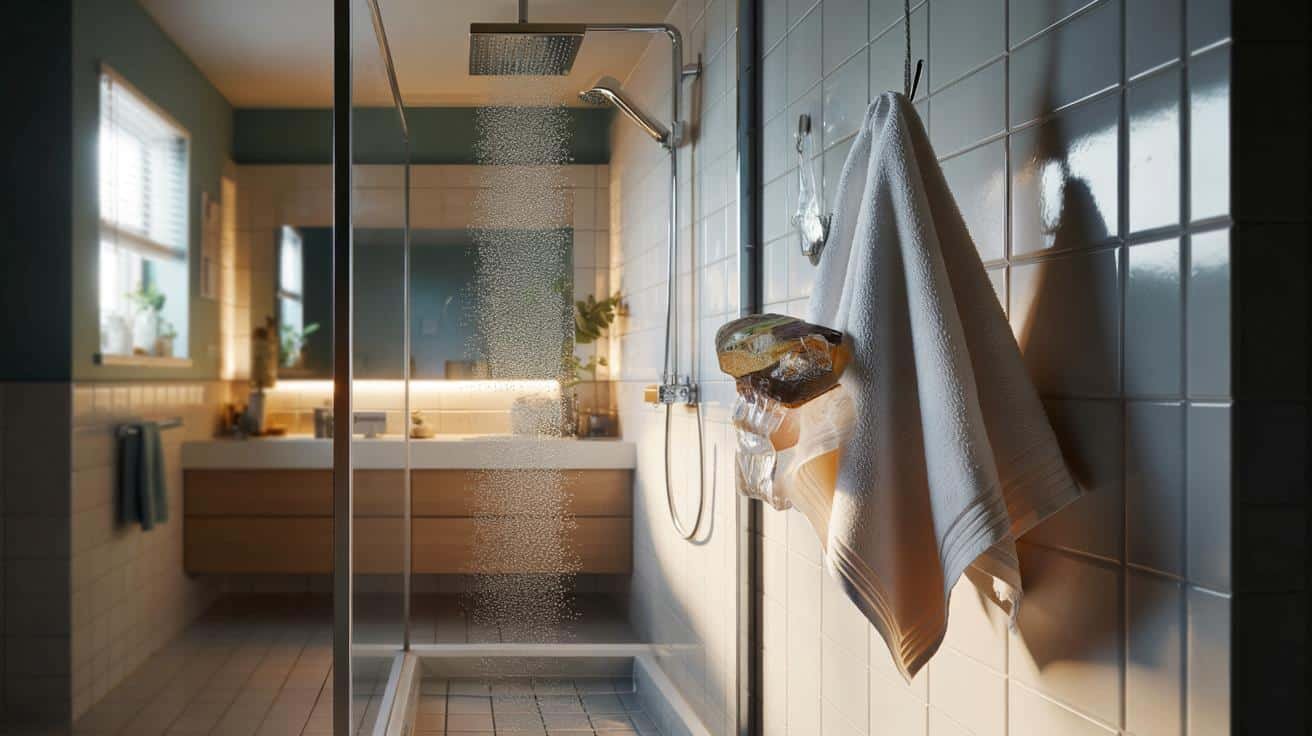
Steamy mirrors, damp towels and that faint musty smell can quietly damage a bathroom, long before mould appears on the tiles.
Across social media and home forums, a simple hanging trick near the shower is gaining traction, offering a low-cost way to fight humidity and keep bathrooms fresher for longer.
The quiet problem hiding in your bathroom
Most people notice condensation only when the mirror fogs up or the window drips after a hot shower. Behind that surface moisture, another story unfolds. Repeated steam saturates grout lines, seeps into silicone joints and lingers inside cabinets. Over time, this encourages mould spores, warped wood, peeling paint and persistent odours.
Bathrooms in rented flats, small city apartments and windowless ensuites are especially vulnerable. Short showers still release a large volume of warm, moist air into a tiny room. An extractor fan often runs for just a few minutes, which rarely dries everything properly.
Moisture that hangs in the air for hours quietly feeds mould, even when surfaces look clean at a glance.
Humidity doesn’t simply vanish once you turn off the tap. It clings to towels, bath mats, the shower curtain and even toilet paper. That’s where a rising trend in “hanging hacks” comes in, targeting moisture before it settles.
The hanging-by-the-shower hack, explained
The principle behind the hack is straightforward: place a moisture-absorbing or air-circulating setup as close as possible to the source of steam, usually right by the shower. Instead of letting humidity spread unchecked, you trap it, absorb it or redirect it while the room is still warm.
What people are actually hanging
Different households adapt the idea to their space and budget. The core concept stays the same: use vertical space near the shower to manage moisture, without drilling or complex installation.
- Absorbent cotton towel or Turkish towel hung high to catch steam.
- Hanging moisture absorber pack filled with desiccant crystals.
- Charcoal deodoriser bag suspended from a hook or shower rail.
- Mesh organizer holding baking soda or rock salt in small containers.
- Compact electric or rechargeable mini-dehumidifier mounted or hung.
By hanging these items at head height or slightly above the shower, warm, moist air meets an obstacle before it blankets the room. Instead of swirling around your cabinets, some of that humidity lands on absorbent fibres or is trapped in desiccant material.
The closer your drying or absorbing setup sits to the rising steam, the faster it starts to work.
How the physics works in your favour
Hot showers push warm vapour upward. As it rises, it hits cooler air and surfaces, turning back into tiny water droplets. When you hang something absorbent or ventilating in that path, you intercept part of this cycle.
An oversized cotton or linen towel acts like a temporary sponge for water vapour. Charcoal bags and moisture absorbers pull water from the air over time. A small fan or mini-dehumidifier encourages active air movement, stopping damp air from lingering in corners.
Simple ways to set up the hack at home
Some setups cost less than a takeaway coffee; others require a slightly higher investment but bring stronger results.
| Hanging solution | Cost level | Main benefit | Best for |
|---|---|---|---|
| Extra cotton towel by the shower | Low | Absorbs steam, easy to wash | Small bathrooms, renters |
| Charcoal or salt bags | Low to medium | Reduces odours and mild dampness | Bathrooms with weak ventilation |
| Hanging desiccant tub | Medium | Strong moisture absorption | Windowless or internal bathrooms |
| Rechargeable mini-dehumidifier | Medium to high | Reusable and more powerful | Humid climates or shared homes |
The towel trap: a fast, no-buy version
One of the most shared tips online simply uses what you already own. Before starting your shower, hang a large, dry cotton or Turkish towel on a hook or rail directly opposite or slightly above the shower head. After washing, leave the towel in place for fifteen to twenty minutes while the room cools.
This extra towel soaks up part of the steam instead of letting it wander across the ceiling and onto cold tiles. Later, move it to a well-ventilated area to dry completely, or run it through the wash. It works best when combined with an open window or a fan.
Desiccant and charcoal: the longer-term helpers
For bathrooms that always feel clammy, many people hang moisture absorber tubs or fabric bags filled with silica gel, calcium chloride, bamboo charcoal or rock salt. These materials pull water out of the air and hold it safely until you empty or recharge them.
They often hang from a simple adhesive hook or from the shower rail, just outside direct spray. As the air warms during your shower, water molecules move more quickly and meet these absorbent surfaces sooner, which improves performance.
A basic hanging absorber will not replace a broken fan, but it can cut that heavy, humid feeling after every shower.
Why this hack matters for health and the building
Beyond fogged mirrors, trapped humidity links to respiratory irritation, allergies and dust mites. Mould spores settle easily on silicone around the bath, behind the toilet and on the ceiling. Once colonies take hold, removal can cost significantly more than prevention.
Landlords and building managers often warn tenants about repeated condensation damage. Peeling paint, swollen skirting boards and black marks on the ceiling point to long-term moisture exposure. A cheap hanging solution near the shower will not solve structural damp, yet it can reduce everyday wear and tear.
For children, older adults and people with asthma, keeping humidity under control reduces triggers. Less mould growth also means fewer harsh chemicals for cleaning, which some households try to avoid.
Where this hack works best – and where it doesn’t
Not every bathroom behaves the same way. Size, insulation, climate and building age all play roles. The hanging-by-the-shower trick tends to work best in:
- Small bathrooms where steam builds up quickly.
- Rooms with weak or noisy extractor fans that people avoid using.
- Rentals where permanent installations are not allowed.
- Homes in damp climates, especially near the coast.
It makes less difference when the bathroom already has a powerful, properly used extractor fan, a window that opens wide, or underfloor heating that dries surfaces quickly. In those cases, the hack becomes an extra layer of comfort rather than the main defence.
How to combine it with other daily habits
The most effective approach blends the hanging hack with a few simple routines. Experts who study indoor air suggest treating the bathroom as a small microclimate that needs regular ventilation and quick drying after use.
- Run the extractor fan for at least fifteen minutes after a shower.
- Keep the door slightly open once you finish washing, if privacy allows.
- Spread towels out flat or hang them separately so they dry faster.
- Lift or hang bath mats instead of leaving them crumpled on the floor.
- Wipe excess water from glass panels and tiles when you can.
With a hanging absorber or towel close to the shower, these small steps add up. Humidity levels drop more quickly, and musty smells tend to fade within days rather than weeks.
Safety, maintenance and what to watch for
Any object hung near the shower should stay out of direct water spray and away from electrical fittings. Adhesive hooks can loosen over time in steamy rooms, so checking them regularly prevents a bag or device from falling into the tub or sink.
Absorbent towels and fabrics need frequent washing to avoid becoming a new source of odour. Desiccant packs require replacement or recharging according to the manufacturer’s guidance. If you notice liquid building up in a tub-style absorber, empty it carefully and keep it out of reach of children and pets.
No moisture hack replaces proper ventilation, but small, consistent habits often shift a bathroom from damp to comfortable.
Thinking beyond the bathroom: wider uses and future tech
The logic behind hanging a moisture solution near the steamiest point extends to other corners of the home. Some people adapt similar setups in wardrobes on outside walls, under the stairs, or in small laundry rooms without windows. The key remains the same: place your absorber or ventilating tool where warm, moist air collects first.
Manufacturers are taking note of this behaviour. Compact dehumidifiers now arrive with hooks, magnetic backings or slim designs made for tight spaces. Sensor-based models track humidity in real time and adjust output automatically. As households push to cut energy costs, these targeted, small-format tools gain appeal compared with large, power-hungry units.
For anyone fighting stubborn dampness, this emerging mix of simple hacks and modest technology suggests a shift in how we treat everyday humidity. Instead of waiting for mould to appear, more people try to catch moisture right where it rises: hanging quietly beside the shower.