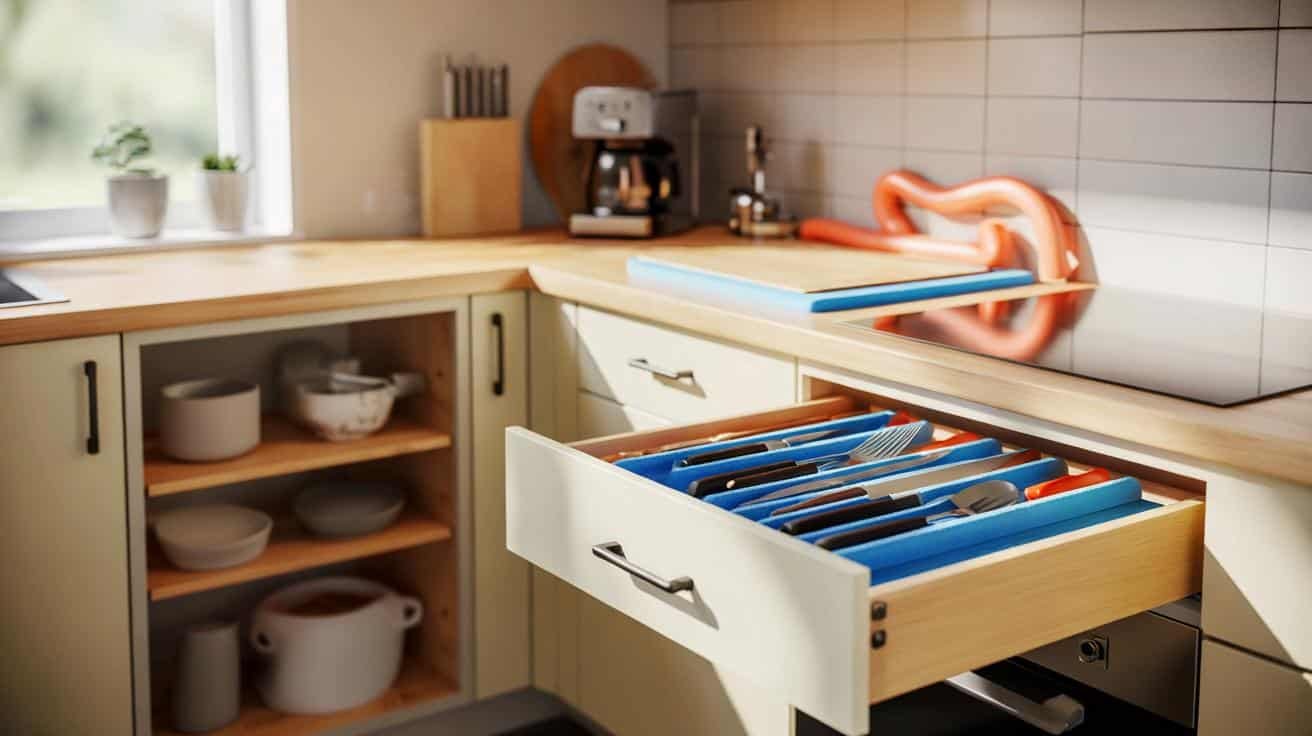
A cheap piece of foam, usually tossed beside the pool, is quietly becoming a secret weapon in home kitchens.
More and more home cooks use this humble pool noodle to solve annoying problems that drawers, cupboards and expensive organisers never really fix.
How a pool noodle moved from the pool to the kitchen
The pool noodle started as a simple flotation toy, made from dense polyethylene foam. It is light, flexible, and easy to cut. For years, people only associated it with children’s swimming lessons and lazy afternoons in the water.
Then came a wave of home hacks on social media. Creators looked at everyday objects and asked a basic question: what else can this do? The pool noodle turned out to be a surprisingly good answer. Its shape and texture solved problems in cars, wardrobes and especially in kitchens.
The foam noodle acts like a custom-fit buffer, spacer or grip wherever rigid plastic and wood fail.
The kitchen, with its heavy doors, sharp edges, slippery drawers and banging cupboards, gave this toy a second career. The trend travelled fast from short videos to family group chats and finally to mainstream home magazines.
Stopping banging doors and rattling drawers
One of the first kitchen uses of a pool noodle targets a sound many people hate: cabinet doors slamming shut. Traditional stick-on bumpers fall off, and soft-close hinges cost money and time to install. The noodle offers a middle ground.
Door silencer in seconds
To soften a cabinet door, a short section of noodle is enough. A cook cuts a piece a few centimetres long, slices it open on one side, and clips it over the inside edge of the cupboard frame or the door itself. The foam compresses each time the door closes, reducing impact and noise.
This trick works well on:
- Under-sink cabinets that people open dozens of times a day
- Pantry doors that echo in small flats
- Children’s cupboards where little hands slam doors by accident
The material resists moisture, so water splashes or steam near the hob do not damage it quickly.
Drawer spacers that actually stay in place
Kitchen drawers often mix utensils, knives, cling film, foil and stray chopsticks in one messy tray. Commercial organisers promise order but rarely fit the drawer dimensions perfectly. Gaps stay, and items slide around every time someone opens the drawer.
A pool noodle behaves like a made-to-measure spacer. By cutting narrow strips and nesting them along the sides or between sections, people lock existing trays and boxes in position. The foam grips gently against the drawer walls, stopping everything from shifting.
Instead of buying new organisers, many households use the noodle as a silent anchor that keeps old organisers working better.
Hidden protection for fragile dishes and appliances
Damage does not only happen when plates fall. Sometimes constant vibration between items in a cupboard leaves fine cracks, chips or scratches. This is where the rounded profile of a pool noodle makes sense.
Edge guards for shelves and glassware
A classic hack involves cutting a noodle lengthways and slipping the “C” shaped strip along the front edge of a shelf. That soft guard protects both the shelf and anything that taps against it, from wine glasses to serving platters.
People with open shelving use more colourful noodles that match or contrast with their kitchen style. In closed cupboards, colour does not matter, so many reuse old faded noodles no one wants by the pool.
Safeguarding appliances and cables
Another growing use concerns small appliances. Food processors, stand mixers and coffee machines often sit near walls or tiles. Vibrations can make them “walk” slightly, scraping surfaces and stressing power cables.
Short noodle segments wedged behind or beside the machine help in several ways:
- They prevent direct contact with the wall.
- They reduce vibration noise on hard surfaces.
- They guide cables into gentle curves, avoiding sharp bends.
Some people also place a thin slice of noodle underneath chopping boards to steady them on glossy worktops. That added friction reduces the risk of slipping while cutting.
Child safety and injury prevention in busy kitchens
The kitchen ranks among the most accident-prone rooms in the home. Hot pans, sharp utensils and hard corners increase the risk, especially for children and older adults. While proper supervision and safe habits matter the most, a pool noodle adds soft barriers in clever spots.
Turning hard corners into soft barriers
Kitchen islands, low worktops and table corners often sit right at toddler head height. Standard corner protectors cover only the tip and sometimes fall off when bumped. A noodle strip, by contrast, can coat the whole edge.
A continuous foam border around a table or island lowers the chance of serious bruises when someone misjudges a corner.
Families usually choose neutral colours and cut the strip neatly so it hugs the wood or laminate. It may not pass for designer furniture, but it buys peace of mind during those energetic years of early childhood.
Soft barriers for sliding doors and lids
Another growing application sits between appliances and walls. A thin section of noodle wedged along the gap beside a fridge or dishwasher stops children from sliding toys or fingers into narrow spaces. It also interrupts the path of cupboard doors that might crush tiny fingers.
Some parents even thread a pool noodle onto the handle of a heavy pot lid and tie it with string, creating a soft “bumper” that lands first if the lid falls from a hook.
Organising awkward spaces on a shoestring budget
From a financial point of view, the trend comes at a time of rising living costs in the UK and US. Many households look for ways to refresh or reorganise kitchens without major spending. A pool noodle commonly costs less than a takeaway coffee and can transform several problem areas at once.
Vertical storage for trays and chopping boards
Vertical storage keeps baking trays and boards more accessible, but metal dividers often scratch surfaces or wobble. Some home cooks now line the base of their cupboards with pool noodle strips. They cut parallel grooves along the top of the foam, then slide trays into these channels.
This method offers three advantages:
- The noodle cushions the metal or wood.
- The grooves keep items upright instead of tipping.
- The system adapts easily to different cupboard widths.
Cleaning stays simple. Users can lift out the foam, wipe it down with mild soap and water, and put it back when dry.
Improvised holders for knives and tools
Some cooks remain wary of magnetic knife strips, especially in homes with children. A modified pool noodle, mounted inside a drawer or on the inner side of a cupboard door, can act as a basic knife or tool holder.
Several narrow slits in a dense piece of foam form a safe parking spot for blades and skewers, away from curious hands.
This system does not replace a proper knife block for long-term storage, yet it helps when a kitchen lacks space for bulky equipment. It also works for metal skewers, kebab sticks and fondue forks that usually roll around in a drawer.
Comparing the noodle to classic kitchen organisers
| Solution | Cost level | Flexibility | Main downside |
|---|---|---|---|
| Dedicated drawer organisers | Medium to high | Limited to fixed sizes | Do not fit every drawer |
| Custom carpentry | High | Excellent, fully tailored | Requires budget and planning |
| Pool noodle hacks | Low | High, easy to cut and move | Less stylish, needs replacing over time |
For renters and students in particular, the foam option offers a reversible set-up. It removes cleanly when someone moves out, leaving cupboards and drawers unchanged.
What to watch out for when bringing foam into the kitchen
The trend brings a few caveats. The material stays relatively stable, but it can melt or deform near high heat. No noodle should sit directly beside an open flame, a gas hob or the inside wall of an oven.
Food safety also raises questions. While most noodles resist water, they are not designed for chopping or serving. People should avoid using them as plate liners for direct contact with food. Instead, they work best as invisible padding under boards, appliances or storage containers.
Pets sometimes chew the foam, which can lead to blockages if swallowed. Households with dogs that gnaw on everything may need to limit noodle use to higher cupboards or enclosed spaces.
Why this simple object fits the current DIY mood
This kitchen phenomenon sits at the crossroads of several broader trends. Social media platforms amplify small, clever ideas at unusual speed. Short clips featuring a five-second fix for a common annoyance attract millions of views, and the pool noodle plays perfectly into that format.
The shift towards reuse and adaptation also matters. Many consumers feel pressure to buy specialised gadgets for each problem at home. Turning an old pool toy into a drawer spacer or corner guard feels like a quiet rejection of that pattern.
A £3 foam tube that extends the life of cupboards, protects plates and calms noisy doors carries a certain quiet satisfaction.
For people who enjoy testing small improvements, the noodle becomes a kind of building block. They cut, bend and rearrange it on a Saturday afternoon, then adjust during the week as they notice new uses.
Beyond the kitchen, the same approach applies elsewhere: a car boot that needs better organisation, a home office where cables slip behind the desk, or a craft corner where scissors and tools keep clattering onto the floor. The pool noodle does not solve everything, but it shifts the way people look at a cheap, familiar object.