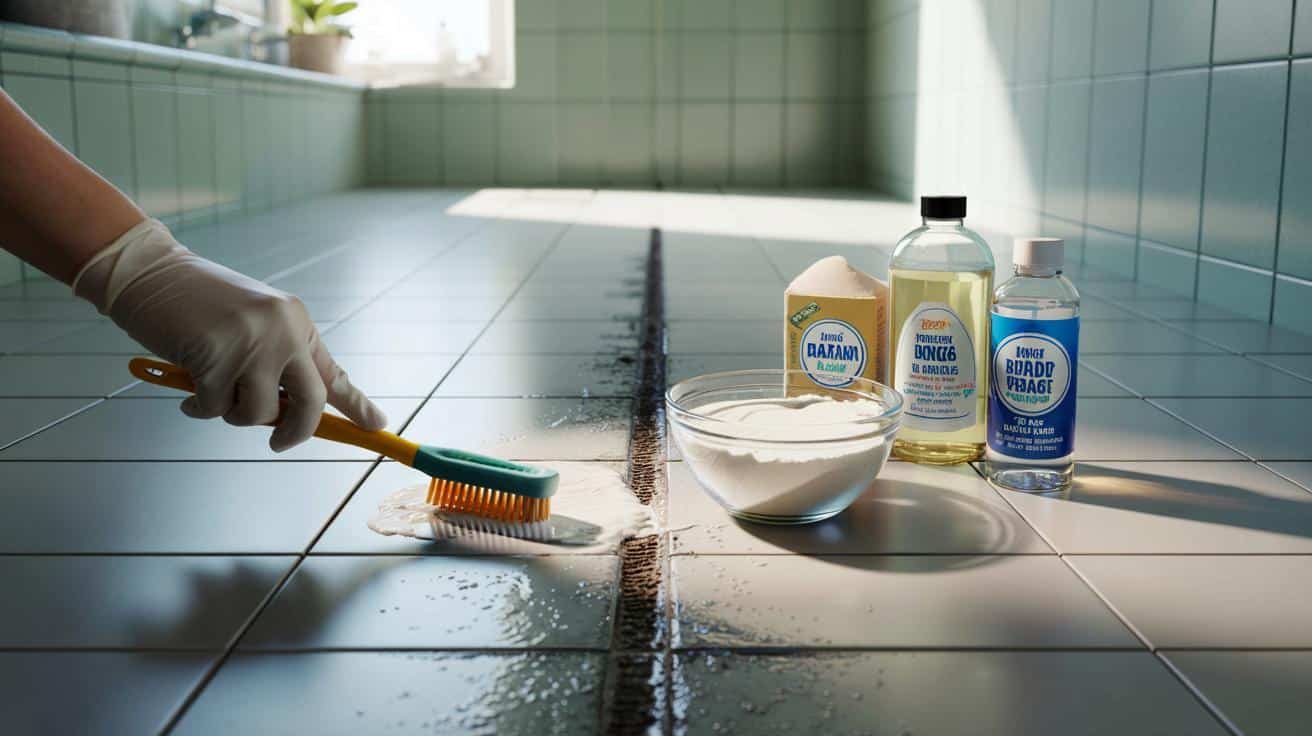
Across social media, a simple three-ingredient mix for grout lines has started to attract attention, promising a quick lift for tired tiles without calling in a professional cleaner.
The viral promise of “15-minute grout”
Scrolling TikTok or Instagram, it is hard to miss short clips where someone brushes a pale paste along dingy grout and wipes away crisp white lines a few minutes later. The formula behind many of these posts stays roughly the same: a kitchen acid, a gentle abrasive and something basic to cut grease.
The attraction is obvious. Professional grout restoration can cost hundreds, and harsh commercial products often smell aggressive or leave surfaces feeling etched. A homemade mix feels cheaper, more controllable and, frankly, more satisfying.
A three-ingredient paste, left on grout for about 15 minutes, can lift years of soap scum and surface staining when used correctly.
Behind the hype, though, sits some plain household chemistry that explains why this method can work, and when it might backfire.
What people actually mix: the basic trio
Most viral versions of the recipe use a combination of:
- Baking soda for mild abrasion and odour control.
- White vinegar or lemon juice as a light acid to dissolve mineral deposits.
- Dish soap or liquid soap to cut body oils and product residue.
Rather than strict measurements, creators tend to talk about “textures” and spoonfuls. Home cleaning experts, questioned by consumer outlets, suggest a simple starting point.
| Ingredient | Typical role | Suggested starting ratio |
|---|---|---|
| Baking soda | Abrasive, pH buffer | 3 parts |
| Dish soap | Grease-cutting surfactant | 1 part |
| White vinegar or lemon juice | Lime scale and soap scum remover | 1–2 parts, adjusted to a spreadable paste |
The aim is a thick paste that clings to vertical grout lines rather than running into the bath or shower tray. Users normally apply it with an old toothbrush or narrow scrubbing brush, working along each line before leaving it to sit.
What happens during those 15 minutes
On camera, the “magic” looks instant. In reality, those 10 to 15 minutes of wait time let several small reactions run their course.
The acid in vinegar or lemon juice starts to loosen mineral stains left by hard water and remove the chalky film that forms where soap meets calcium. Baking soda provides a fine physical scrub that does not scratch typical ceramic tiles but can disturb the grime lying in the porous grout.
That gentle fizz between baking soda and vinegar helps dislodge dirt from tiny pits in grout, so it wipes away more easily.
Dish soap keeps loosened oils and product residue suspended in the mixture rather than letting them slide back into the grout. When the paste is finally wiped or brushed off and rinsed, those suspended particles head down the drain.
Where this method works best
Specialists in tile maintenance say the three-ingredient mix suits everyday cleaning and cosmetic refreshes, especially in these cases:
- Light to moderate discolouration from soap scum and body oils.
- Greyish film in showers or around baths rather than deep brown, orange or black stains.
- Bathrooms and kitchens with standard glazed ceramic or porcelain tiles.
- Homes where residents prefer to avoid heavy-duty bleach or strong fumes.
For many households, using this kind of paste once a month can prevent stains from settling too deeply in grout, making professional intervention less urgent.
Real limits: when grout “looks” new but isn’t
Grout ages from the inside as well as the surface. Hairline cracks, crumbling edges and persistent dark spots often signal more than everyday dirt.
Surface brightening does not repair cracked or failing grout, and it does not reach mould thriving behind tiles.
Experts warn that the three-ingredient trick cannot:
- Rebuild grout that has started to crumble or fall out.
- Kill stubborn mould that has rooted behind the tile line.
- Change grout that was originally coloured dark grey or brown.
- Address leaks or water seeping through gaps.
In those situations, re-grouting, sealing or professional remediation may be the only long‑term answer, even if the homemade paste produces a temporary cosmetic lift on camera.
Risks and what to avoid
Using ingredients from the pantry does not automatically make a cleaning recipe gentle. Vinegar and lemon juice remain acids, and baking soda remains an abrasive mineral.
Tile manufacturers and safety advisers point to a few hazards.
Wrong surface, wrong chemistry
Natural stone such as marble, limestone and travertine reacts poorly to acidic cleaners, even weak ones. The same recipe that brightens grout can etch a satin patch into stone over months of use.
Metal trims, drains and some decorative finishes can also dull if they sit under an acidic paste for repeated 15‑minute cycles. A quick patch test in a hidden corner remains a sensible first step.
Bleach cocktails and strong fumes
Perhaps the bigger risk arrives when people start “improvising”. Online comments often suggest adding bleach for extra power or topping up with a commercial cleaner.
Mixing vinegar and chlorine bleach produces chlorine gas, which can irritate lungs and eyes even at low levels in a small bathroom.
Cleaning safety groups stress a simple rule: use one system at a time. If a bleach-based product was used earlier, rinsing the area thoroughly before switching to vinegar or lemon-based recipes helps avoid interaction.
Step-by-step routine used by many households
The exact routine differs from clip to clip, but a common pattern has emerged.
- Ventilate the room by opening windows or using an extractor fan.
- Sweep or rinse loose dust and hair from tiles and grout.
- Mix baking soda with dish soap, then add vinegar or lemon juice until a thick paste forms.
- Apply the paste along grout lines with a toothbrush or narrow brush.
- Leave it for around 10–15 minutes, checking that it does not dry completely.
- Scrub along the lines with the same brush, focusing on visibly stained spots.
- Wipe away residue with a damp cloth or sponge and rinse thoroughly.
- Dry the area with a towel to reduce new water marks.
This relatively short routine, fitted into a weekend cleaning round, often produces enough improvement for the “before and after” contrast that drives social media engagement.
How professionals see the trend
Tile installers and restoration companies view the viral recipe with mixed feelings. Many accept that the chemistry aligns with standard practice: a non‑chlorine alkaline cleaner, a mild acid to cut scale and a mechanical scrub. Some professionals even recommend a similar combination for weekly bathroom care.
Where they raise concerns is longevity. Repeated aggressive scrubbing can thin grout over the years, particularly in older homes where lines already sit low between tiles. They point to gentler maintenance once the worst staining has lifted.
For long-term care, many specialists prefer frequent light cleaning and a quality grout sealer rather than repeated heavy “rescue” sessions.
Applied every year or two, clear sealers soak into grout and make it harder for dirt, shampoo residue and body oils to grab hold. With a good sealer in place, the three-ingredient paste becomes an occasional touch‑up rather than a monthly ritual.
Beyond grout: small chemistry lessons for the home
The success of this cleaning trend taps into a broader shift in home care. Many households mix their own products from short ingredient lists, partly to save money and partly for a sense of control over what lingers on surfaces.
Understanding a little about acids, alkalines and abrasives makes those experiments safer. Mild alkalines such as baking soda suit greasy kitchen splashes, while gentle acids like vinegar handle mineral rings left by hard water. Stronger chemicals still have a place for serious jobs, but they sit alongside simpler blends rather than replacing them.
For grout, that balance matters. A quick homemade paste may restore the look of a bathroom for guests, yet it also raises bigger questions about ventilation, moisture management and the hidden life of walls. Those who watch the 15‑minute transformation on their phones might, eventually, end up checking extractor fans, seals and tile work with a more critical eye.